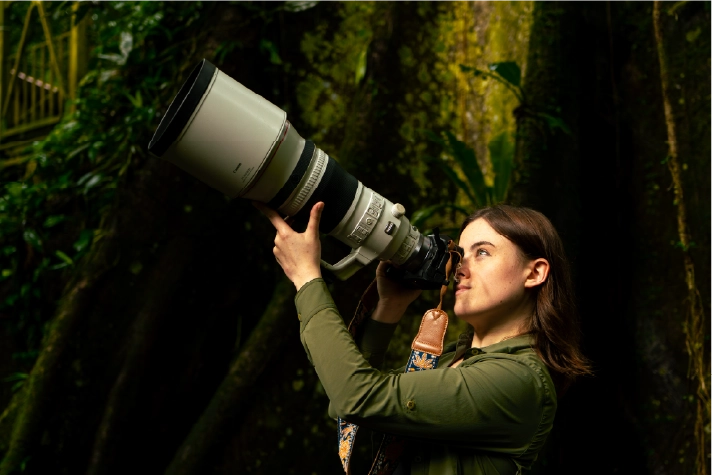
For wildlife photographers, few places in the world feel as alive, unpredictable, and visually powerful as Yasuní.
Located in the Ecuadorian Amazon, Yasuní National Park is a place where every sound, shadow, reflection, and movement can become a photograph. From colorful macaws at clay licks to monkeys moving through the canopy, caimans resting in quiet waters, giant river otters swimming through lagoons, and birds appearing among the branches at sunrise, the rainforest offers endless opportunities for those who know how to observe with patience.
At Napo Wildlife Center, photography is not only about capturing animals. It is about experiencing the Amazon through light, silence, water, forest, and time.
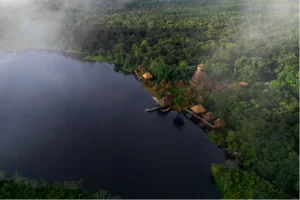
Surrounded by rainforest, Añangucocha Lagoon, observation towers, forest trails, canoe routes, and wildlife-rich habitats, Napo Wildlife Center offers one of the most immersive photography experiences in the Ecuadorian Amazon.
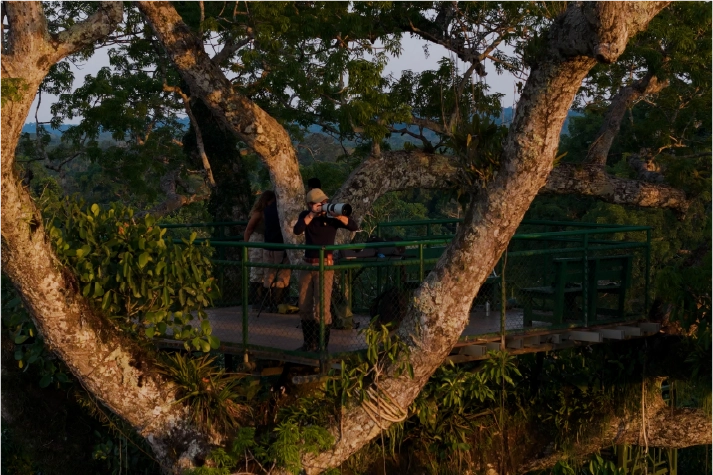
Observation Towers: Photographing the Amazon From Above
The Amazon is a forest of layers. At ground level, the rainforest feels dense, humid, and mysterious. But from an observation tower, the experience changes completely. Suddenly, the canopy opens, the horizon expands, and the forest becomes an endless green world.
Napo Wildlife Center gives guests access to observation towers that are ideal for birdwatching and photography. From above the canopy, photographers can capture mammals and especially birds that are often difficult to see from the forest floor.
Toucans, aracaris, tanagers, raptors, parrots, macaws, and many other species may appear from the treetops. The towers also offer incredible opportunities for landscape photography, sunrise images, misty forest scenes, and wide-angle shots that show the scale of Yasuní.


Yasuní: A Living Stage for Wildlife Photography
The beauty of photographing in Yasuní is that no two days are ever the same. One morning may begin with mist over the lagoon and the sound of birds waking up in the forest. A few hours later, the colors of macaws may fill the clay lick. In the afternoon, soft light can fall over the water, creating perfect reflections of the rainforest. At night, the forest changes completely, revealing frogs, insects, reptiles, and nocturnal life. For photographers, this variety is what makes Yasuní so special. Wildlife appears naturally, sometimes unexpectedly, and often only for a few seconds. This makes every photograph feel earned, real, and deeply connected to the moment. In Yasuní, photography is an exercise in patience, attention, and respect.Clay Licks: Color, Movement, and Amazon Energy
One of the most iconic photography experiences near Napo Wildlife Center is visiting the clay licks, also known locally as saladeros. These natural sites attract parrots, parakeets, and macaws that come to feed on mineral-rich clay. For wildlife photographers, this is one of the most visually exciting moments in the Amazon rainforest. Scarlet Macaws, Red-and-green Macaws, parrots, and other colorful birds may gather in the same place, creating a scene full of movement, sound, and color. The challenge is part of the magic. Birds arrive, fly, land, interact, and sometimes leave quickly if they sense a change in the environment. Weather, light, and the presence of other animals can influence the activity at the clay lick. For photographers, this means being ready.Observation Towers: Photographing the Amazon From Above

The Amazon is a forest of layers. At ground level, the rainforest feels dense, humid, and mysterious. But from an observation tower, the experience changes completely. Suddenly, the canopy opens, the horizon expands, and the forest becomes an endless green world.
Napo Wildlife Center gives guests access to observation towers that are ideal for birdwatching and photography. From above the canopy, photographers can capture mammals and especially birds that are often difficult to see from the forest floor.
Toucans, aracaris, tanagers, raptors, parrots, macaws, and many other species may appear from the treetops. The towers also offer incredible opportunities for landscape photography, sunrise images, misty forest scenes, and wide-angle shots that show the scale of Yasuní.
Canoe Rides: Silent Photography From the Water
One of the most beautiful ways to photograph Yasuní is from a canoe. At Napo Wildlife Center, canoe rides through Añangucocha Lagoon and surrounding waterways allow photographers to move quietly through the landscape. This silence is essential. It creates a deeper connection with the environment and increases the chances of observing wildlife without disturbing it. From the canoe, the perspective is completely different. You may photograph reflections on the water, birds perched near the lagoon, caimans along the edges, monkeys moving through riverside trees, hoatzins hidden in vegetation, or giant river otters swimming through the lagoon. Canoe photography also offers a unique visual style: low angles, mirror-like reflections, soft movement, and a feeling of being inside the scene rather than outside of it.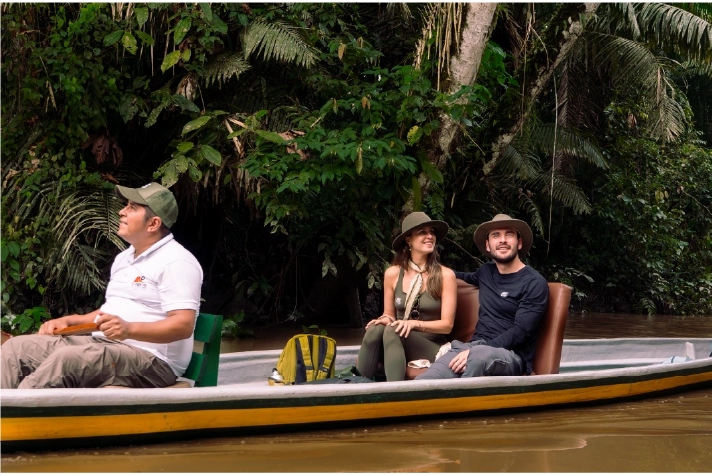
Añangucocha Lagoon: Reflections, Wildlife, and Light
Añangucocha Lagoon is one of the most iconic landscapes of Napo Wildlife Center. For photographers, it offers a combination that is hard to find elsewhere: calm water, surrounding rainforest, open sky, wildlife activity, and changing light throughout the day. At sunrise, the lagoon can feel peaceful and almost surreal. Mist may rise from the water, birds begin to call, and the first light touches the forest. During the day, the lagoon becomes a place to search for wildlife. At sunset, the sky and trees may reflect over the water, creating dramatic and emotional images. The lagoon is also part of the identity of Napo Wildlife Center. Many of the most memorable photographs from the lodge are created from this relationship between water, forest, wildlife, and architecture.Wildlife Encounters in the Ecuadorian Amazon
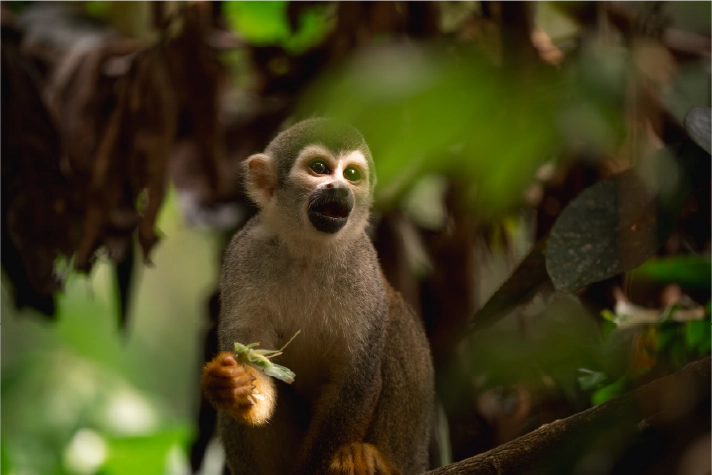
Yasuní is one of the most exciting places for wildlife photography because of the variety of species that can be encountered. Photographers visiting Napo Wildlife Center may have opportunities to capture images of:- Monkeys moving through the canopy.
- Scarlet Macaws and Red-and-green Macaws at clay licks.
- Toucans, aracaris, tanagers, kingfishers, puffbirds, and raptors.
- Caimans resting or swimming in quiet waters.
- Giant river otters in family groups.
- Hoatzins near the lagoon vegetation.
- Frogs, insects, spiders, and reptiles during night walks.
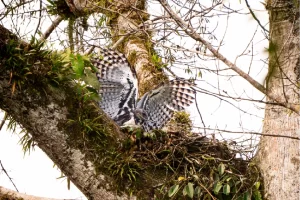
- The powerful Harpy Eagle story within the protected territory of the Kichwa Añangu Community.
The Magic of Amazon Light
Light in the rainforest is constantly changing. Sometimes it filters softly through leaves. Sometimes it appears as a narrow beam between branches. Sometimes it reflects off the lagoon, turning the water into gold. Sometimes it disappears almost completely under the dense canopy. For photographers, this light can be challenging, but also incredibly rewarding. The best moments often happen early in the morning and late in the afternoon, when the sun is softer and wildlife is more active. These hours can create warmer tones, stronger atmosphere, and more natural contrast.Local and naturalist Guides: The Key to Better Wildlife Photography
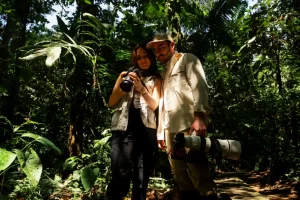
In the Amazon, knowing where to look is just as important as having the right camera. The guides at Napo Wildlife Center play a major role in the photography experience. Their knowledge of animal behavior, bird calls, trails, trees, weather, and wildlife movement can help photographers understand the forest more deeply. A guide may hear a bird before anyone sees it. Notice movement in the canopy. Recognize the sound of monkeys nearby. Understand when to wait quietly. Know which places are best at certain times of day. This local knowledge helps photographers not only take better images, but also respect wildlife and observe without disturbing natural behavior.Photography Tips for the Amazon Rainforest
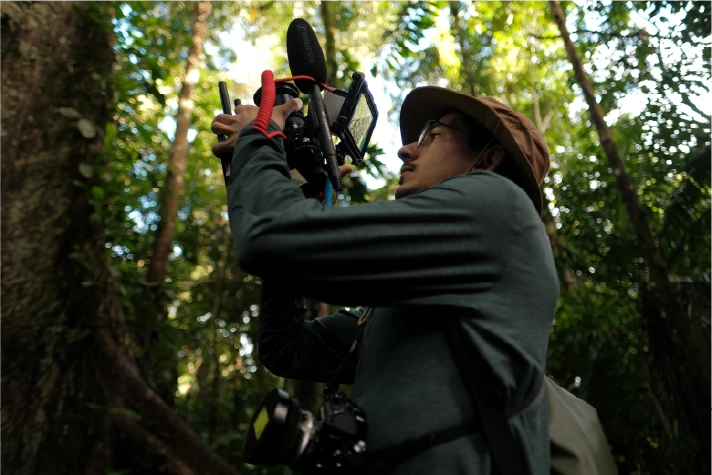
Wildlife photography in Yasuní is different from photography in open landscapes. The rainforest requires patience, preparation, and respect. Here are a few tips:- Wake up early. The best wildlife activity often happens in the morning.
- Be patient. Some of the best images come after waiting quietly.
- Protect your gear from humidity.
- Use silent mode when photographing sensitive wildlife.
- Avoid flash with wildlife, especially at night or near nesting areas.
- Listen to your guide.
- Keep your camera ready, because wildlife moments can happen quickly.
- Focus not only on animals, but also on light, textures, reflections, and people.
- Respect distance and never pressure wildlife for a photo.
Why Napo Wildlife Center Is Ideal for Wildlife Photographers
Napo Wildlife Center is a dream destination for wildlife photographers because it offers something that cannot be created artificially: a living, breathing, unpredictable rainforest. Here, every photograph has a story behind it. It is not only about capturing beautiful images. It is about connecting with the Ecuadorian Amazon in a deeper way. For photographers seeking wildlife, landscapes, birdwatching, conservation, and authentic rainforest experiences, Yasuní is more than a destination. It is a place where every frame feels alive.